One of the most common questions new parents ask is deceptively simple: how many hours should a newborn sleep? The answer depends entirely on age — and changes dramatically between a newborn and a one-year-old. Knowing the right norms for your baby's age helps you tell the difference between a normal sleep pattern and something that needs attention.
General information from online sources, not written by a doctor and not a substitute for individual medical advice. Recommendations may differ by country; ask your care team about your baby.
Sleep is not a luxury for babies — it's a critical biological need. During sleep, growth hormone is released, the brain processes new information, the immune system strengthens, and early memories are consolidated. A baby who sleeps well for their age tends to be calmer, feed better, and develop optimally.
Baby sleep chart by age (the quick answer)
Here is the amount of sleep most babies need in a 24-hour period, based on widely used pediatric sleep guidelines:
| Age | Total sleep / 24h | Night sleep | Naps |
| Newborn (0–3 months) | 14–17 hours | 8–9 hours (broken) | 4–6 naps |
| 4–6 months | 12–16 hours | 9–11 hours | 2–3 naps |
| 6–12 months | 11–14 hours | 10–11 hours | 2 naps |
| 12–24 months | 11–14 hours | 10–11 hours | 1 nap |
Newborn sleep (0–3 months): 14–17 hours
A newborn sleeps most of the day and night — but in short bursts. Their tiny stomach empties every 2–3 hours, so they wake to feed around the clock. There is no real day/night rhythm yet: a newborn may sleep four hours in the afternoon and be wide awake at 2 a.m. This is completely normal and not something you can (or should) "fix" in the first weeks.
What matters at this stage is the total over 24 hours, not any single stretch. If your baby is feeding well, gaining weight, and clocking roughly 14–17 hours of total sleep, they are getting what they need — even if it never feels continuous for you.
4–6 months: the pattern starts to settle
Between four and six months, a real circadian rhythm develops. Night stretches get longer, naps consolidate into 2–3 predictable blocks, and many babies begin sleeping 6 or more hours at night. This is also when the well-known "4-month sleep regression" can appear — a temporary disruption caused by your baby's sleep cycles maturing, not by anything you did wrong.
6–12 months: two naps and longer nights
By six months, most babies sleep 11–14 hours total, with the bulk at night and two daytime naps (morning and midday). This is a great age to build a consistent bedtime routine — the more predictable the rhythm, the easier settling becomes.
How do I know if my baby is sleeping enough?
Numbers are a guide, not a rule — every baby is different. Instead of chasing an exact figure, watch the pattern over time. Signs your baby is getting enough sleep include waking calmly, feeding well, and having alert, happy awake periods. Signs of a sleep deficit include constant fussiness, difficulty settling, very short naps, and overtiredness (paradoxically, an overtired baby is often harder to put down).
Track your baby's sleep the easy way
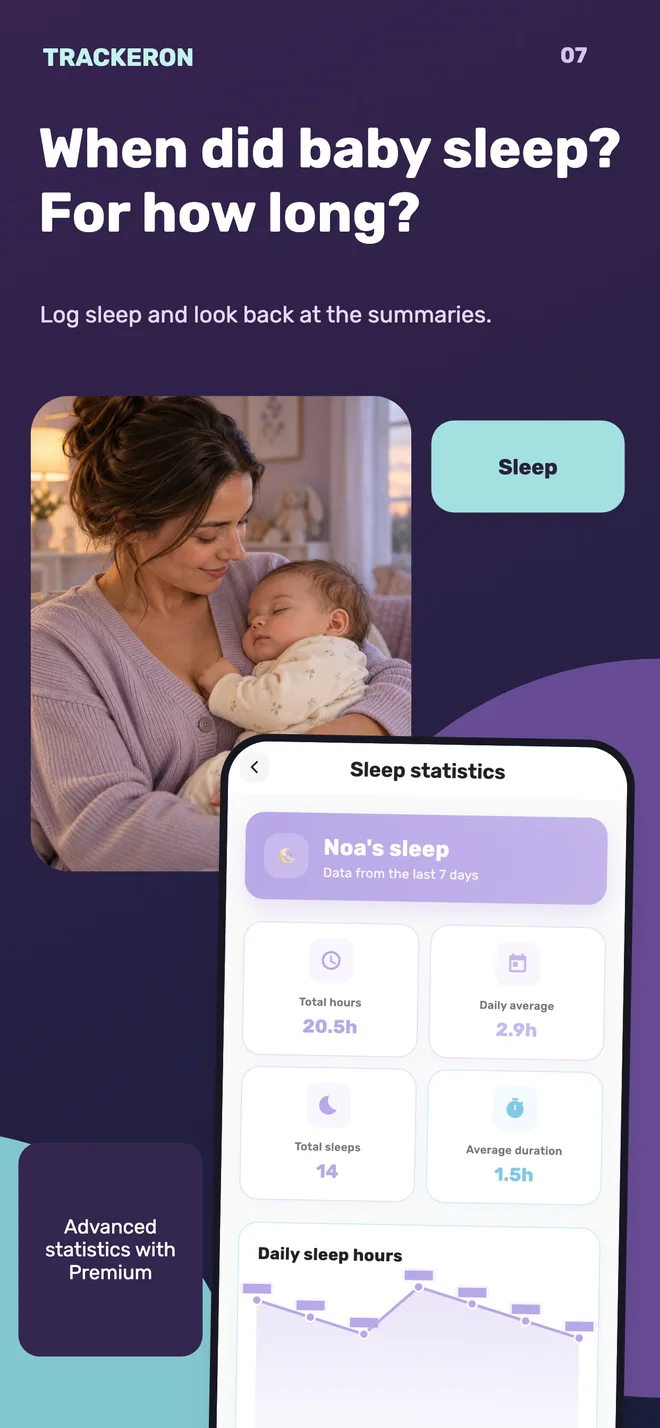
Guessing how much your baby slept is exhausting. Trackeron lets you log every nap and night with one tap, then shows clear daily and weekly charts so you can see the real pattern — and check it against the norms for your baby's age.


Frequently asked questions
How much should a 2-month-old sleep? About 14–16 hours a day, in 4–6 stretches, with frequent night wakings to feed.
When do babies sleep through the night? Many babies sleep 6+ hours by 6 months, but "through the night" varies widely and is influenced by feeding, temperament and routine.
Is it bad if my newborn sleeps a lot? Newborns are supposed to sleep a lot. As long as they wake to feed regularly and are gaining weight, plenty of sleep is healthy. If your baby is unusually hard to wake for feeds, check with your pediatrician.
The bottom line: how many hours a newborn should sleep comes down to age. Newborns need 14–17 hours; by the first birthday that settles to 11–14. Track the total over time rather than obsessing over any single night — and let the pattern, not the panic, guide you.